
Roof replacement in Cambridge
A full strip and re-roof in slate or tile, with new membrane, battens, flashings and ridge, done by the same team.
Free quote, no pressure, from a team with over 20 years in the trade.
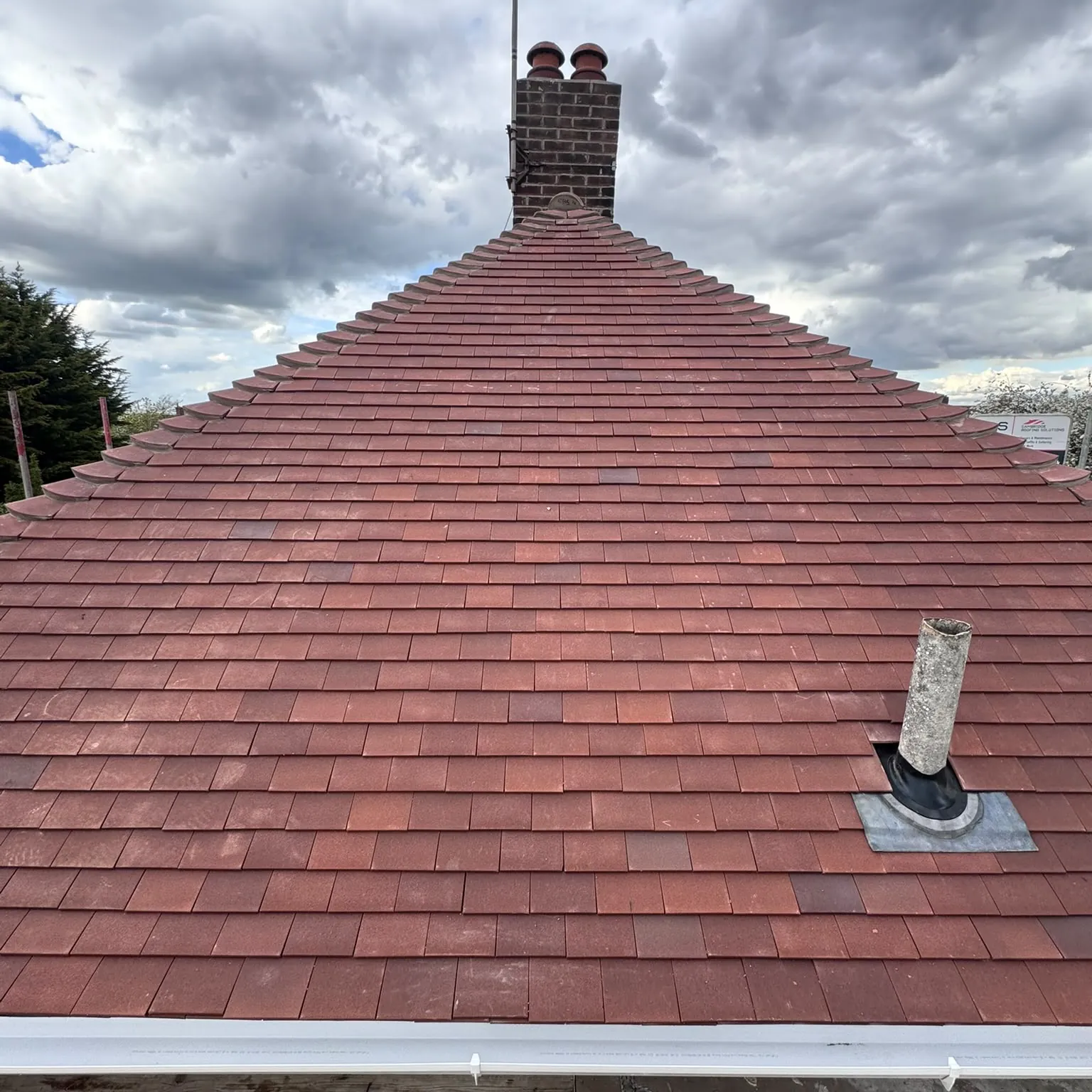
Get a free quoteCall 01223 297 866Roof replacement means taking the old covering off down to the rafters and building the roof back up: breathable membrane, new treated battens, then tiles or slates fixed to the right gauge, with new ridge, valleys and lead. We re-roof houses across Cambridge when repairs no longer hold, and the free quote sets out every stage.
Signs the roof has had its day
A roof rarely fails all at once. It is time to talk about a new roof when faults show up on every slope and each repair only lasts a season.
Tiles slipping everywhere. Rusted nails let go right across the roof, so the slipped tiles are no longer in 1 spot.
Daylight in the loft. Gaps at the eaves or between tiles, or old felt hanging in strips between the rafters.
A dipping ridge or slope. A sag can mean overloaded or decayed timbers, which we check once the roof is open.
Flaking tiles and slates. Clay tiles that spall and slates that split into layers have reached the end of their life.


From strip to ridge
Scaffold goes up first, with a chute or skip so the garden stays clear. We strip the old tiles or slates, setting aside any sound ones you want reused, and take off the old felt and battens.
Check the timbers. With the roof open, we look at every rafter and the wall plate, and replace or strengthen any that are rotten or split.
Membrane and battens. A breathable membrane goes over the rafters, then treated battens set out to the gauge the tile or slate needs.
Covering. Tiles or slates are laid course by course and nailed or clipped, with the cut pieces at hips and valleys kept to a sensible size.
Ridge, hips and lead. Ridge and hips go on bedded or as a dry system, and we renew the lead at chimneys, abutments and valleys.
Handover. The scaffold comes down once you have seen the finished roof and the gutters are clear of our debris.
Choosing the new covering
Most people replace like for like, and on older Cambridge houses that is usually the right call. A different material can change the load on the rafters and the look from the street.
Natural slate. For Victorian terraces and villas, holed and nailed to the batten, with slate and a half pieces at the verges.
Clay plain tiles. Small, double lapped tiles for steep roofs, common on Edwardian and interwar houses, with bonnet or valley tiles where they were used before.
Concrete interlocking tiles. Larger tiles that suit lower pitches and many post war roofs, and lighter per square metre than plain tiles.
Manufactured slate. Fibre cement or composite slates where natural slate is not needed, checked against the pitch of the roof.

New roofs across Cambridge
Many Cambridge houses are still on their first roof. Victorian terraces in Petersfield and Romsey and the bigger villas in Newnham were built with natural slate, and a lot of them still have the original slates on iron nails that have rusted out. Houses from the 1930s in Cherry Hinton and Queen Edith's often have clay tiles, some swapped for concrete later on. If your house is listed or in a conservation area, speak to Cambridge City Council before you change the material. On a terrace, we will also agree with you where your roof stops and your neighbour's starts.
Questions we are asked most
Can you reuse my old slates?
Often, in part. Natural slate can outlast the nails that hold it, so we strip carefully and sort what is sound. Reused slates usually go on the front slope so the house still matches the street, with new slates of a close size and colour on the back. Slates that are flaking or soft at the nail holes are not worth putting back.
Will I need to move out while the roof is replaced?
No. The ceilings stay in place while we work on the outside, and the roof is covered at the end of each day so the house stays dry. There will be noise and some dust in the loft, so clear anything stored up there before we start. We place the scaffold and skip where you agree, so you can still get in and out.
What happens if you find rotten timbers once the roof is off?
We show you before anything else is done. A rotten rafter end or a decayed wall plate can be cut out and replaced or strengthened while the roof is open, which is the easiest time to do it. If the damage goes beyond what the quote allowed for, we explain what we found and agree the extra work with you before carrying on.
Do you replace roofs on bungalows and extensions too?
Yes. We re-roof houses, bungalows, extensions and outbuildings in tile or slate. If part of the house has a flat roof as well, such as a rear extension or a garage, we can replace that at the same time in felt, EPDM, Resitrix or a Sika system, so 1 scaffold and 1 team cover the whole job.